https://ift.tt/r0SwapQ This data scientist roadmap shows you exactly what to learn, in what order, and how long it realistically takes to b...
This data scientist roadmap shows you exactly what to learn, in what order, and how long it realistically takes to be job-ready in 2026–2027, whether you’re starting from scratch or transitioning from data analysis, software engineering, or research.
To cut through the noise about what matters now (Python or R? Master’s or self-taught? GenAI or classical ML?), we built this roadmap around insights from Anna Pershyna, Chief Technology Officer at Dataquest. Her perspective on what data scientists need to know to get hired heading into 2027 shapes the five framings below and the four-phase plan that follows.
At Dataquest, we’ve helped thousands of learners become job-ready data scientists through our Data Scientist Career Path, which follows this roadmap’s foundation-first approach with hands-on projects from day one.
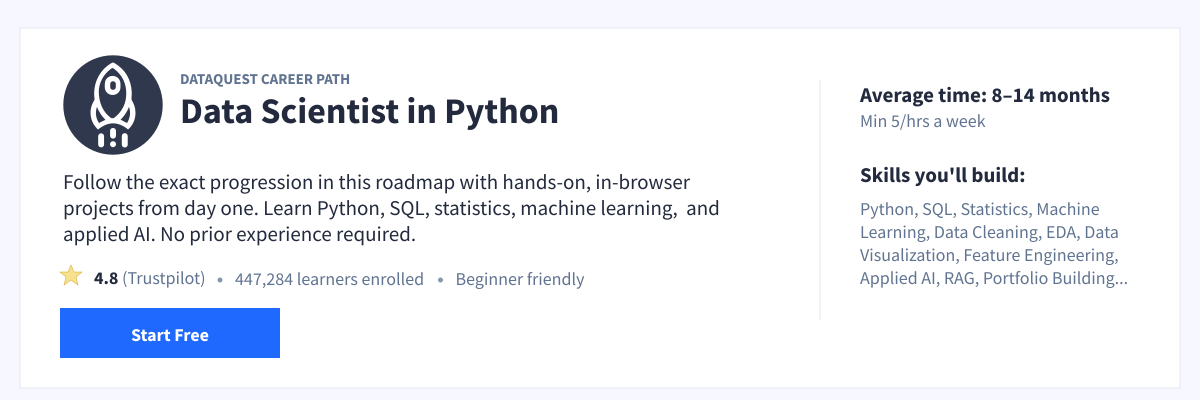
Table of Contents
- What Changed About Becoming a Data Scientist in 2026–2027
- Why Become a Data Scientist?
- What Does a Data Scientist Actually Do?
- Is Data Science Right for You?
- How Long Will This Take?
- The Complete Data Science Roadmap
- Phase 1: Build Your Foundation
- Phase 2: Statistics, Probability, and Deeper Analysis
- Phase 3: Applied Machine Learning and AI
- Choose Your Specialization
- Phase 4: Portfolio, Communication, and Job-Ready Polish
- Common Mistakes to Avoid
- Your Next Steps
- Resources to Accelerate Your Learning
- Frequently Asked Questions
What Changed About Becoming a Data Scientist in 2026–2027
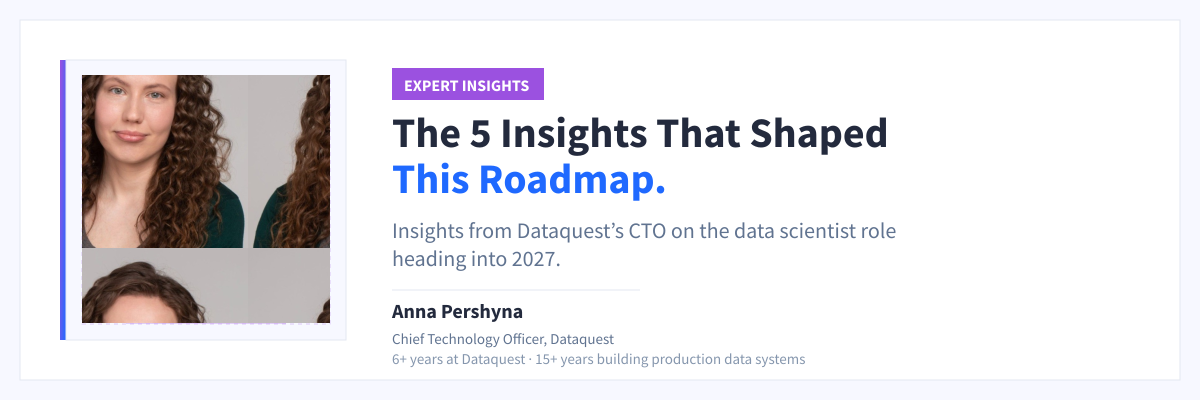
Before getting into the phase-by-phase plan, here are the five insights from Anna Pershyna that shape this entire roadmap. These are the things she sees most beginners and career changers get wrong heading into 2027, and the framing that the rest of this guide is built around.
Insight 1: The dominant “AI is replacing data scientists” narrative is too narrow
The story you hear most often online is that GenAI is making traditional data science obsolete. Anna’s view is that this framing misses what’s actually happening.
"The story isn't that traditional data science is being replaced by GenAI. That framing is too narrow. Finance, healthcare, insurance, risk, and operations still need people who can build and validate predictive models. GenAI is an additional branch of the field, not a replacement."
— Anna Pershyna, CTO, Dataquest
What this means for you: don’t skip foundations to chase LLMs. Predictive modeling, experimentation, fraud detection, forecasting, and model explainability are still very much in demand. Lightcast’s “Top Jobs to Watch” research supports that the core data science skill set (SQL, Python, statistics, machine learning, analytics, project management) still anchors hiring across industries.
Insight 2: The harder entry-level market isn’t unique to data science
Many career changers come to data science worried they’ve picked the wrong moment. Anna’s read is that the entry-level market is harder across the board, not just in data science, and not specifically because of AI.
The Economic Policy Institute reports that depressed hiring rates are a major cause of labor-market weakness for recent college graduates, economy-wide. The New York Fed tracks elevated underemployment among recent graduates. Lightcast’s “Dangers of the Diamond” research finds that only about one in ten postings is geared toward entry-level workers, suggesting employers are less willing to train from scratch.
For data science specifically, PwC’s 2026 Global AI Jobs Barometer adds that AI-exposed junior roles are roughly seven times more likely to demand traditionally senior skills like leadership and strategic thinking. The bar is higher, but the path is still very much open. It just takes a stronger portfolio and clearer specialization than it used to.
Insight 3: Many “junior” data science roles were never truly junior
This is a long-standing issue Anna has watched intensify. Companies post “junior” data science openings but expect production-grade output, polished communication, and the ability to operate semi-independently.
The takeaway is that you shouldn’t be discouraged if entry-level postings look intimidating. They’re written for people with strong portfolios and clear domain interest. The way to clear that bar isn’t more credentials. It’s a portfolio that demonstrates real work and clearly shows a chosen specialization (more on that in Insight 5).
Insight 4: Companies are getting more cost-conscious about AI
While AI tooling is being integrated everywhere, the other half of the story is that companies are rethinking how much they spend on it as we get closer to 2027. The Financial Times has reported that companies including Amazon, Walmart, Cisco, Uber, and Meta are limiting AI usage on cost grounds. Gartner predicts that more than 40% of agentic AI projects will be canceled by the end of 2027 due to cost, business value, and risk control concerns.
For data scientists entering the field now, this creates an opportunity where practitioners who can evaluate AI tool ROI, design cost-aware systems, and quantify business value are unusually valuable in this market. Skip the hype. Learn to ask “Is this worth it?” alongside “Can this work?”
Insight 5: Pick one specialization after the foundations, not all three
The single most important piece of advice from Anna on how to actually finish this roadmap:
"Build the foundations first. SQL, Python, statistics, machine learning, evaluation, communication. After that, pick one of three paths: analytics and business data science, applied machine learning, or generative AI and AI product workflows. Trying to do all three at the beginner level is how people stall out."
— Anna Pershyna, CTO, Dataquest
The rest of this roadmap reflects this structure. Phases 1–3 build the universal foundations. After Phase 3, you choose one specialization to go deep on. Phase 4 is where you build a portfolio that demonstrates real work in that specialization.
With those five framings in place, let’s dive in.
Why Become a Data Scientist?
Before getting into how to become a data scientist, it’s worth establishing why this career is worth your time.
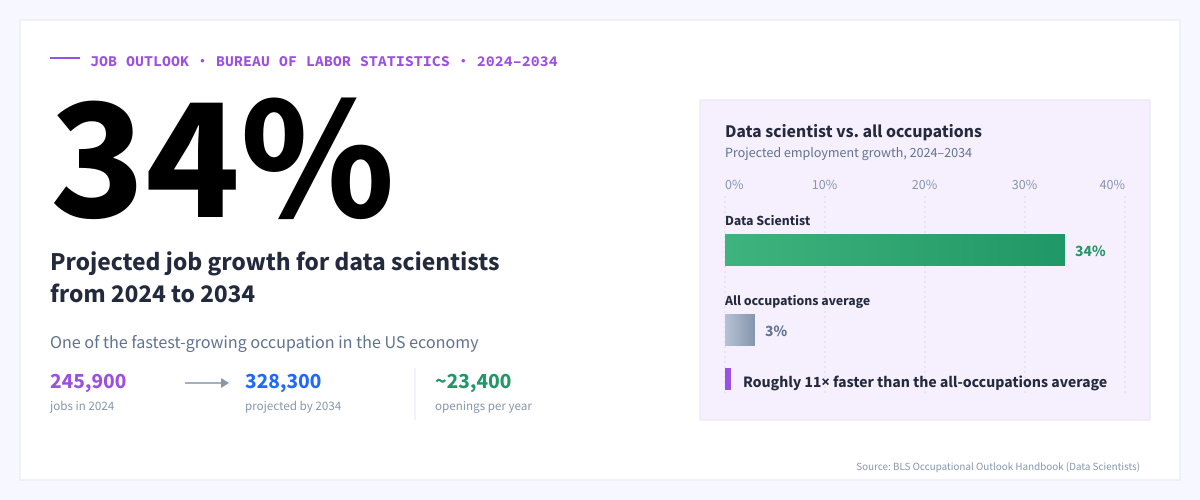
- Demand is strong and growing. The BLS projects 34% employment growth for data scientists from 2024 to 2034, making it one of the fastest-growing occupation in the US economy. That works out to about 23,400 job openings each year, with the total employed population projected to grow from 245,900 in 2024 to over 328,000 by 2034.
- The compensation is excellent. Data scientists in the United States earn a median annual wage of \$112,590, according to BLS data from May 2024. Glassdoor’s 2026 data puts average total compensation higher, around \$155,000 when you include base salary, bonuses, and equity. Entry-level roles typically start between \$85,000 and \$110,000, mid-level \$115,000 to \$145,000, and senior data scientists often exceed \$150,000.
- The skill set is durable. As Anna noted in Insight 1, traditional data science work remains essential across finance, healthcare, insurance, risk, logistics, and operations. AI tools are extending what data scientists can do, not replacing the role.
- The work is meaningful. Data scientists influence real decisions by determining which customers a bank flags as fraud risks, which patients a hospital prioritizes, and which features a product team ships next quarter. The work isn’t always glamorous, but it matters.
What Does a Data Scientist Actually Do?
Data science job descriptions are full of intimidating buzzwords (predictive modeling, MLOps, causal inference, RAG pipelines). What does the work actually feel like day to day?
A Day in the Life of a Data Scientist
Here’s a realistic Tuesday for a mid-level data scientist at a mid-sized tech company. This isn’t romanticized. It’s the genuine mix of analysis, modeling, meetings, and writing that makes up the role.
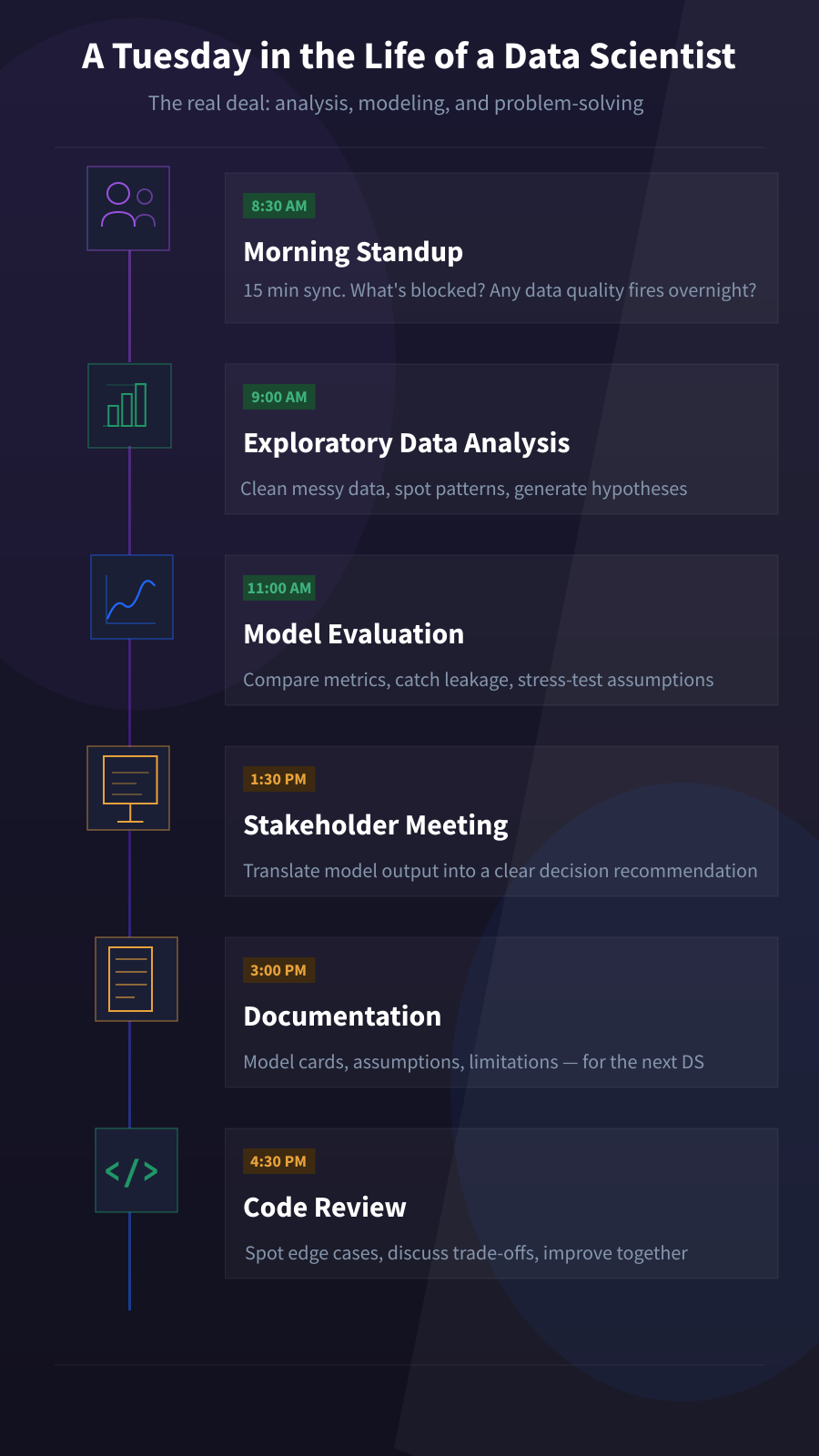
If solving ambiguous problems with messy data sounds energizing rather than frustrating, you’re probably wired for this work.
Core Responsibilities
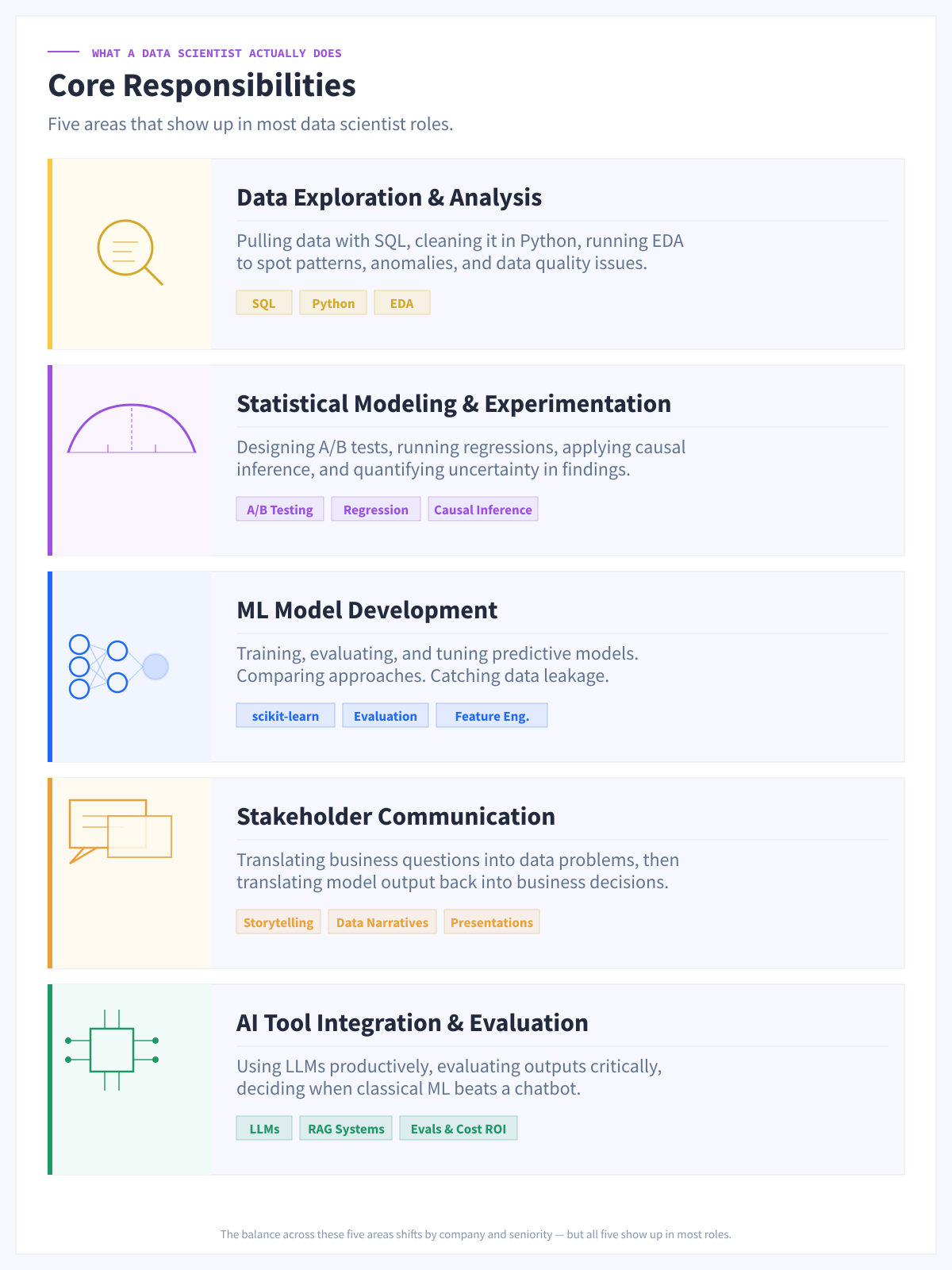
The data scientist role splits across five main areas — from pulling and cleaning data to building models, communicating findings, and evaluating AI tools. The balance shifts by company and seniority, but all five show up in most roles.
Data Scientist vs. Related Roles
Data science overlaps with several adjacent roles, and the boundaries blur depending on company size. Here’s how the core data roles compare.
| Role | Primary Focus | Example Deliverable | Key Difference |
|---|---|---|---|
| Data Scientist | Extracting insights and predictions from data | Customer churn prediction model with business writeup | You build models and explain what they mean |
| Data Analyst | Business intelligence and reporting | Quarterly sales dashboard | You interpret data for stakeholders |
| Data Engineer | Building data infrastructure | ETL pipeline processing 1M records/hour | You build the systems others use |
| Machine Learning Engineer | Productionizing models at scale | Recommendation model serving real-time traffic | You deploy and operate models in production |
| AI Engineer | Building AI-powered product features | RAG system over company documentation | You build LLM-integrated applications |
A useful mental model: data engineers build the roads, data analysts drive familiar routes and report on traffic, data scientists explore new routes and predict where they lead, ML engineers turn those routes into highways, and AI engineers add intelligent navigation on top.
Is Data Science Right for You?
Data science isn’t for everyone, and that’s okay. Before investing 8–14 months of your time, it’s worth checking whether the day-to-day reality matches what you’re looking for.
You’ll likely enjoy data science if you:
- Find ambiguous problems energizing rather than frustrating
- Are comfortable with uncertainty (data is messy; answers are rarely clean)
- Enjoy explaining technical findings to non-technical people
- Don’t mind spending most of your time on data cleaning and validation
- Are naturally curious about why things behave the way they do
You may not enjoy it if you:
- Want to spend your day only building cool ML models (you won’t)
- Dislike statistics
- Prefer the certainty of pure software engineering
- Find open-ended business questions frustrating
Reality check on the work itself. A significant portion of a data scientist's time goes to data cleaning, exploration, and validation, not model training. Beginners who picture themselves training neural networks all day usually quit when they realize how much of the work is wrangling messy spreadsheets.
Reality check on the market. As Anna’s Insight 2 noted, the entry-level bar is higher than it was three years ago, but that’s a broader trend across industries, not a data-science-specific death sentence. A strong portfolio and clear specialization still open the door.
How Long Will This Take?
Your path depends on where you’re starting from and how much time you can dedicate each week.
Starting From Scratch (No Programming Experience)
- 5 hrs/week → 12–18 months
- 10–15 hrs/week → 6–9 months
- 20+ hrs/week → 4–6 months
This is the longest path, but it’s completely achievable. You’ll build programming, SQL, statistics, and machine learning skills from the ground up. The good news is you’ll learn with fresh eyes and won’t carry bad habits.
Your focus: Phase 1 fundamentals. Don’t rush through Python and SQL because everything downstream depends on them.
Transitioning From a Data Analyst Role
What you already have: SQL skills, comfort with EDA, business context, basic Python or scripting experience.
What to focus on: Statistical rigor, machine learning fundamentals, model evaluation, and applied AI tools. Your SQL is probably your biggest asset.
Your timeline:
- 5 hrs/week → 3–6 months
- 10+ hrs/week → 2–4 months
Transitioning From Software Engineering
What you already have: Strong programming, Git fluency, system thinking, debugging skills.
What to focus on: Statistics and probability, machine learning fundamentals, business framing, and stakeholder communication. Your SQL might also be weaker than you think.
Your timeline:
- 5 hrs/week → 6–9 months
- 10+ hrs/week → 3–5 months
Transitioning From Academia or Research
What you already have: Strong statistics, often some machine learning, research framing.
What to focus on: Production Python, SQL, business context, and writing for non-technical audiences. Industry communication is very different from academic writing.
Your timeline:
- 5 hrs/week → 3–6 months
- 10+ hrs/week → 2–4 months
These are guidelines, not guarantees. Your actual timeline depends on how quickly concepts click and how consistently you practice. Even 5 hours a week adds up faster than you’d think, and consistency beats intensity every time.
The Complete Data Science Roadmap
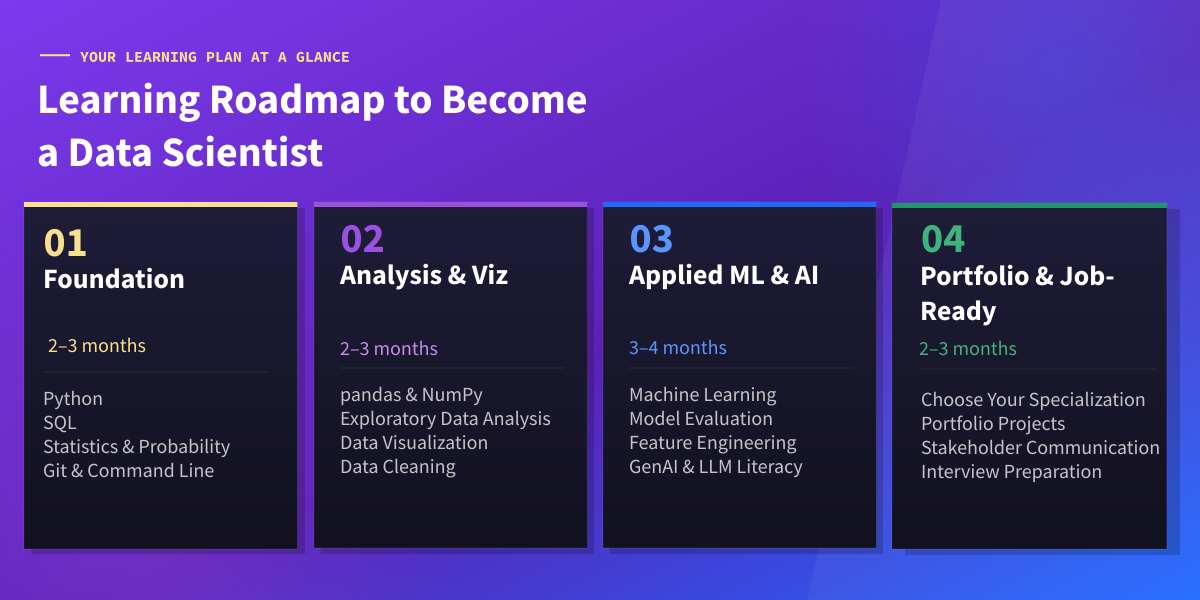
Here’s the full learning journey. Three phases of foundations, followed by one specialization (per Anna’s Insight 5) and a portfolio that demonstrates real work in that specialization.
Realistic timeline: With consistent, focused study, depending on background and weekly study time, you can be job-ready in 8–14 months. Dataquest’s Data Scientist Career Path is designed to take you there with hands-on projects from the first lesson.
The data science tech stack
Here’s a visual overview of the tools and technologies you’ll explore. Don’t worry if some names are unfamiliar.
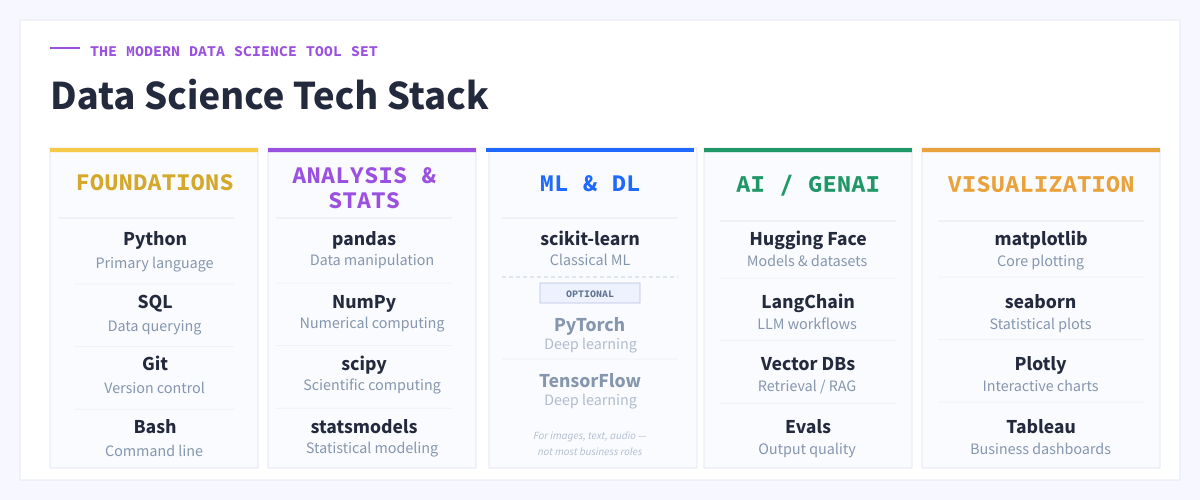
This is a guideline, not a rigid prescription. What matters is consistent forward movement.
Phase 1: Build Your Foundation
Timeline: 2–3 months
Every data scientist relies on these fundamentals daily. Don’t rush them.
Skill: Python Programming
Why it matters. Python is the dominant language for data science. You’ll use it for cleaning, analysis, machine learning, automation, and increasingly for working with AI tools.
What to learn. Core syntax (variables, loops, conditionals, functions), data structures (lists, dictionaries, sets), file I/O, and basic error handling. Don’t worry about advanced topics yet. Our Python for Data Science Fundamentals course covers everything with hands-on exercises.
How to practice. Project Euler gives you a stream of programming problems that build Python fluency and problem-solving instincts.
Timeline: 1 month
Skill: pandas, NumPy, and Data Visualization
Why it matters. pandas is where you'll spend most of your time as a data scientist. NumPy underpins it. Visualization comes right alongside because you can't explore data meaningfully without charting it, and communicating findings clearly is half the job.
What to learn. DataFrames, indexing, filtering, groupby, joins, missing data handling, dates, pivot, and melt. For NumPy: vectorized operations, indexing, broadcasting. For visualization: matplotlib basics, seaborn for statistical plots, and the principles of good chart design. Our Pandas Fundamentals course and Data Visualization with Python path cover all of this.
How to practice. Find a messy real-world CSV and clean it from scratch. Then visualize what you found. Recreate a chart from a news article in matplotlib, then try to improve it.
Timeline: 4–6 weeks
Skill: Data Cleaning and Wrangling
Why it matters. A significant portion of a data scientist's time goes to data cleaning, exploration, and validation, not model training. Beginners systematically underestimate this.
What to learn. Handling missing values, standardizing formats, deduplication, type conversion, messy joins, and validating that your cleaning didn't distort the data. Our Data Cleaning path walks through real, messy datasets.
Timeline: 3–4 weeks (and ongoing)
Skill: Command Line, Git, and SQL
Why it matters. SQL is arguably the single most important skill for a data scientist — beginners chasing machine learning often underestimate it, then hit a wall in interviews. The command line and Git are table-stakes professionalism: you'll work in terminals, push code to GitHub, and collaborate with engineers who expect fluency.
What to learn. For SQL: SELECT, WHERE, ORDER BY, aggregations, JOINs, GROUP BY, subqueries, CTEs, and window functions. The SQL Skills path covers all of this. For command line and Git: navigating directories, basic Bash, commits, branches, merges, and the GitHub workflow.
How to practice. SQL Murder Mystery and PostgreSQL Exercises for SQL. Oh My Git! for Git intuition.
Timeline: 4–5 weeks
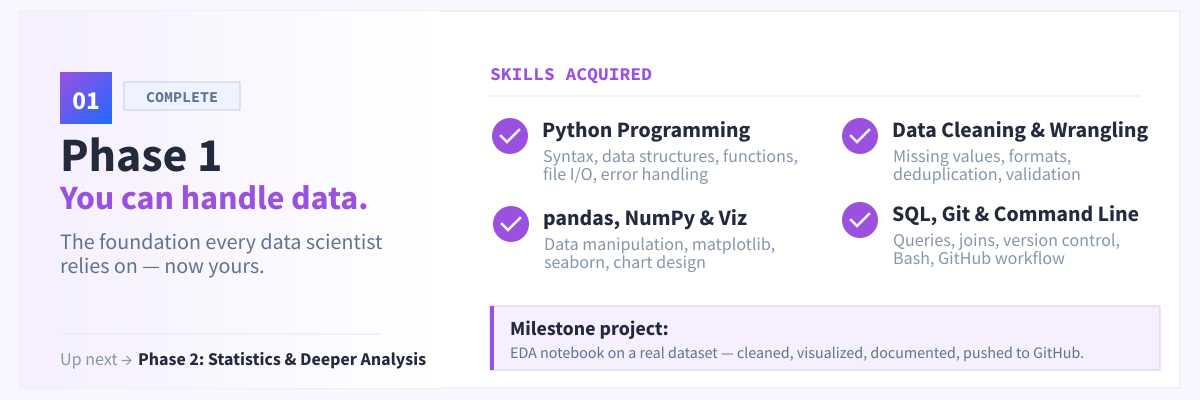
Milestone Project — Phase 1
Pick a real dataset and produce a complete EDA notebook. Load it with pandas, clean it, explore it visually, and document conclusions. Push it to GitHub.
This is your first portfolio piece. Treat it like an interview sample.
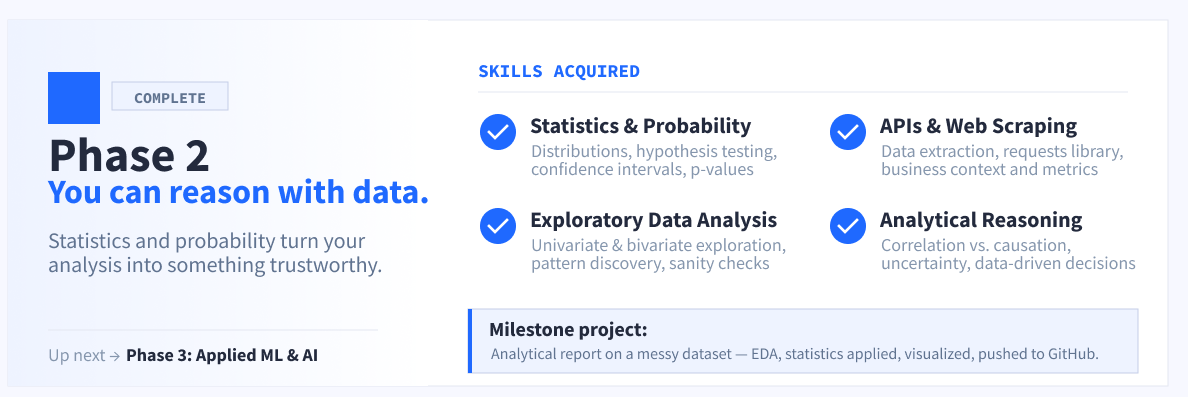
Phase 2: Statistics, Probability, and Deeper Analysis
Timeline: 2–3 months
With Python, data manipulation, and visualization in place, you're ready to learn to reason with data — not just describe it.
Skill: Statistics and Probability Fundamentals
Why it matters. Statistics is what separates a data scientist from a programmer who happens to know pandas. Most beginners rush past it to get to "the cool ML stuff" and pay for it later in interviews, in model evaluation, and when results don't hold up.
What to learn. Descriptive statistics, probability fundamentals, sampling, hypothesis testing, p-values, confidence intervals, correlation vs. causation. You don't need to derive theorems, but you do need to know when each tool applies.
Our Probability and Statistics with Python path covers this with applied exercises.
Timeline: 4–6 weeks
Skill: Exploratory Data Analysis (EDA)
Why it matters. EDA is where data scientists generate hypotheses and catch problems before they bite. Skipping it leads to bad models built on flawed assumptions.
What to learn. Univariate and bivariate exploration, missing data patterns, sanity checks, and the habit of asking "what surprises me here?"
Timeline: 2–3 weeks (and ongoing)
Milestone Project — Phase 2
Take a messy real-world dataset and produce a complete analytical report. Clean the data, document every decision, do thorough EDA with statistics applied, produce publication-quality visualizations, and write a clear summary. Push it to GitHub.
Phase 3: Applied Machine Learning and AI
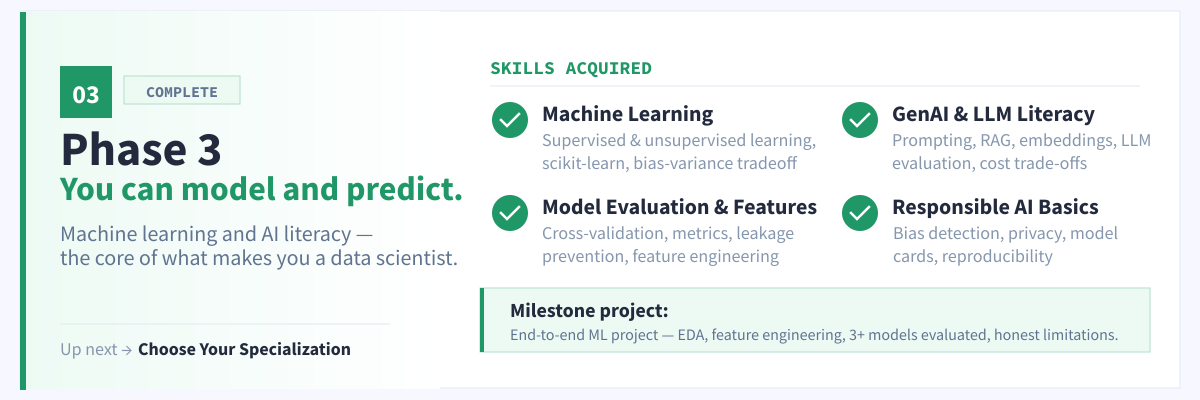
Timeline: 3–4 months
With data handling, visualization, and statistics in place, this is the phase that turns you from an analyst into a data scientist.
Skill: Machine Learning Fundamentals
Why it matters. Machine learning is what distinguishes a data scientist from an analyst. With it, you can build systems that scale beyond manual analysis.
What to learn. Supervised learning (linear/logistic regression, decision trees, random forests, gradient boosting). Unsupervised learning (k-means, hierarchical clustering, PCA). The bias-variance tradeoff. Our Machine Learning in Python path covers it with hands-on projects.
How to practice. Apply each algorithm family to a different problem on Kaggle. Aim to understand why some algorithms work better on specific data shapes.
Timeline: 6–8 weeks
Skill: Model Evaluation and Validation
Why it matters. A model that scores 99% on training data is usually broken. Knowing how to evaluate properly is what makes you trustworthy.
What to learn. Train/validation/test splits, cross-validation, classification metrics (accuracy, precision, recall, F1, ROC-AUC), regression metrics (RMSE, MAE, R²), data leakage prevention, baseline comparisons.
Timeline: 2–3 weeks
Skill: Feature Engineering
Why it matters. Better features beat better algorithms in most real-world problems.
What to learn. Encoding categorical variables, scaling, date and time features, interaction terms, basic text features, handling high-cardinality categoricals.
Timeline: 2–3 weeks
Skill: Generative AI and LLM Literacy
Why it matters. As Anna's Insight 4 covered, employers in 2026 and heading into 2027 expect data scientists to be productive with AI tools and able to evaluate ROI honestly. The cost-conscious angle matters as much as raw capability.
What to learn. Prompting basics. When to use an LLM vs. classical ML. Embeddings and vector search. RAG at a working level. How to evaluate LLM outputs (because they're confidently wrong often). Basic awareness of inference cost and latency trade-offs.
Our Generative AI Fundamentals path covers the core concepts. The Stanford AI Index 2026 is a good reference for the broader AI landscape.
How to practice. Build a small RAG-style app over a personal dataset, then add a simple evaluation harness that measures answer quality on held-out questions.
Timeline: 3–4 weeks
Skill: Responsible AI and Evaluation Basics
Why it matters. Responsible AI, privacy, reproducibility, and cost-aware evaluation are becoming table stakes. The NIST AI Risk Management Framework is a widely-cited reference that maps to what employers increasingly expect.
What to learn. Documenting model assumptions and limitations. Basic bias detection. Privacy fundamentals (PII handling, anonymization). Reproducibility (random seeds, environment pinning). Simple model cards.
Timeline: 2 weeks (integrated alongside other Phase 3 skills)
Milestone Project — Phase 3
Build an end-to-end machine learning project. EDA, feature engineering, three+ models compared, proper evaluation, honest discussion of limitations. Bonus: add an LLM-based component with basic evaluation.
Choose Your Specialization
After Phase 3, you’ve built the universal foundations. Now comes Anna’s Insight 5 in practice: pick one of three specializations and go deep. The three paths reflect what’s actually being hired in 2026 and what’s expected to grow through 2027.
All three share the same table-stakes expectations: responsible AI awareness, privacy, reproducibility, documentation, stakeholder communication, and cost-aware evaluation. The difference is where you go deep.
The three specializations
| Specialization | Focus | Portfolio Should Show | Best Fit For |
|---|---|---|---|
| Analytics & Business Data Science | Metrics, experimentation, business recommendations, decision support | SQL depth, A/B testing, dashboarding, clear business writeups | Career changers from business or operations |
| Applied Machine Learning | Model training, validation, error analysis, explainability | End-to-end ML projects, evaluation rigor, feature engineering | Healthcare, finance, risk, e-commerce roles |
| Generative AI & AI Product Workflows | Retrieval, evaluation, guardrails, cost-aware design | RAG projects, eval harnesses, guardrail implementations | Search, support, knowledge-work tooling |
Which path fits you?
A simple decision framework:
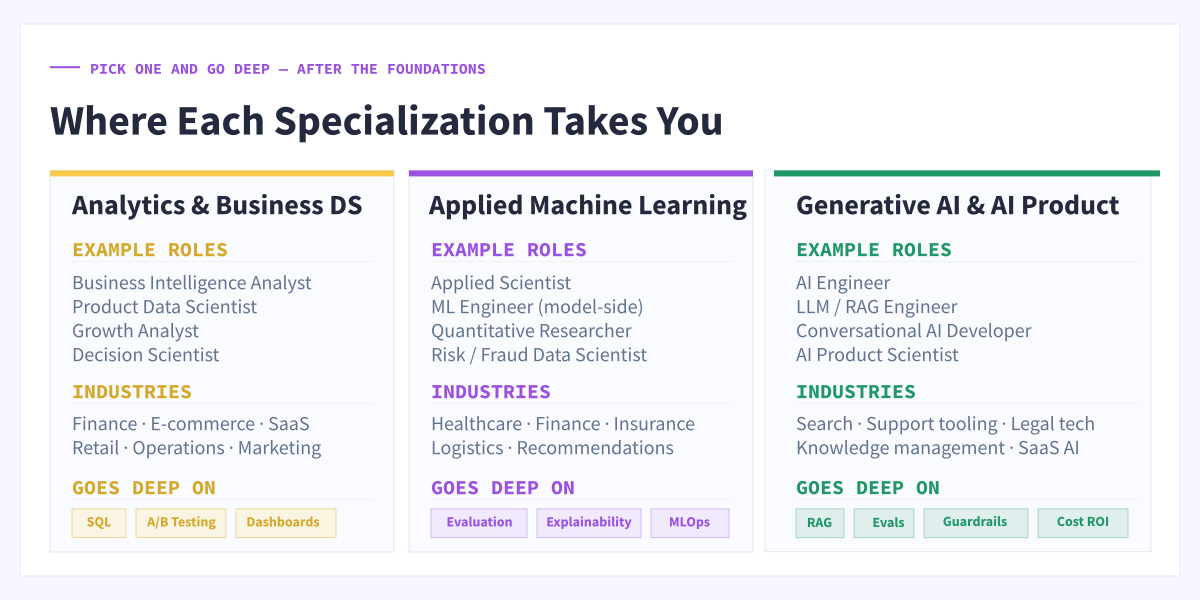
- Choose Analytics & Business Data Science if you enjoy framing business questions, you love SQL, and you want roles in finance, operations, or product analytics.
- Choose Applied Machine Learning if you enjoy the modeling craft and want roles in healthcare, finance, fraud detection, or recommendation systems. Start by going deeper on machine learning in Python.
- Choose Generative AI & AI Product Workflows if you’re drawn to LLMs and retrieval, you want to build AI features inside products, and you’re comfortable evaluating fast-moving tools. Start with AI Engineering.
The broader skill-shift research backs this up. Lightcast’s Speed of Skill Change research finds the average job has seen about one-third of its skills change in three years, and the World Economic Forum’s Future of Jobs Report 2025 shows analytical thinking, creative thinking, resilience, and curiosity rising alongside AI and big data. Durable foundations plus one deep specialization beats shallow coverage of all three.
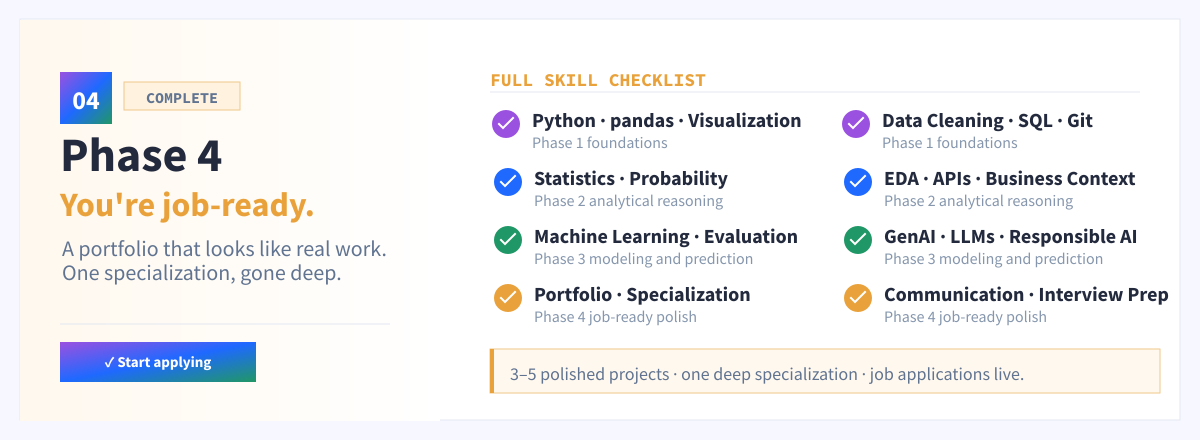
Phase 4: Portfolio, Communication, and Job-Ready Polish
Timeline: 2–3 months
This phase translates your skills into a portfolio that gets you interviews and the soft skills that get you offers.
Skill: Portfolio Project Depth
Why it matters. Hiring managers care more about three polished projects than ten mediocre ones. The portfolio has to look like real work, not a tutorial collection.
What to include. Aim for 3–5 projects covering EDA, supervised machine learning, unsupervised machine learning, and ideally one project aligned to your chosen specialization. Our guide to building a data science portfolio project walks through it.
Volunteer and Pro Bono Projects Done Right
If you don’t have professional data science experience yet, volunteer and pro bono projects help. But Anna’s guidance here is specific:
Pro bono projects can absolutely help compensate for limited experience, but only when they look like real work. Messy data, ambiguous requirements, documented assumptions, honest limitations. Polished Kaggle solutions don't show employers what they actually need to see.
— Anna Pershyna, CTO, Dataquest
What “real work” looks like in a portfolio:
- Messy data. Real datasets have missing values, inconsistent formats, surprising quirks. Show how you handled them.
- Ambiguous requirements. You had to figure out what the question even was. Show that thinking.
- Documented assumptions. Every analysis depends on assumptions. List yours.
- Honest limitations. Tell the reader what your work doesn’t prove.
- A clear “why this is worth using” explanation. What decision does this support, and how confident should the user be?
Good places to find genuine pro bono work include Statistics Without Borders, DataKind, and Catchafire.
Skill: Communication and Stakeholder Skills
Why it matters. Data scientists who can’t explain their work to non-technical stakeholders don’t get promoted. Strong communication is the single highest-leverage soft skill in this role.
What to learn. Translating model output into business language. Leading with the conclusion. Using analogies. Knowing when to push back on a stakeholder’s framing. Writing documentation someone six months from now can follow.
How to practice. Explain one of your projects out loud to a non-technical friend. If they don’t get it within five minutes, rewrite. Repeat until you can hit a clear summary in under two minutes.
Skill: Interview Preparation
Why it matters. Even strong candidates fail interviews because they don’t prepare for the format.
What to learn. SQL screens (window functions and tricky joins). Take-home ML projects (clean code, clear writeup, honest limitations). Case studies. Behavioral questions. For senior roles, basic ML system design.
How to practice. Mock interviews on Pramp or with peers. Talk out loud while solving SQL problems because interviewers want to hear your reasoning.
Milestone Project — Phase 4
A complete portfolio with 3–5 polished projects, each in its own GitHub repo with clear documentation. README per project explaining the business problem, methodology, data, assumptions, results, and limitations. At least one project aligned to your chosen specialization.
By the end of this phase, you’ll have:
Common Mistakes to Avoid
Here are the traps that slow people down most, with fixes that work.
Mistake 1: Trying to Learn Everything at Once
You see a job posting wanting Python, R, SQL, Spark, TensorFlow, PyTorch, Airflow, Snowflake, AWS, and LLMs. You try to learn all of them. You make no real progress on any.
Fix: Master one skill before adding another. Follow this roadmap’s phases sequentially. You don’t need everything for your first job. You need fundamentals deep and demonstrable ability to learn new tools quickly.
Mistake 2: Tutorial Hell
You watch course after course. Everything makes sense while you follow along. Then you try to build something yourself and freeze.
Fix: After every tutorial, close it and rebuild the project from scratch. If you can’t do it without the tutorial open, you haven’t learned it yet.
Mistake 3: Skipping Statistics
You rush past statistics because it feels less exciting than ML. Then you can’t evaluate models, design experiments, or explain a p-value in an interview.
Fix: Spend the full 4–6 weeks on statistics in Phase 2. It’s the layer that makes everything else trustworthy.
Mistake 4: Underestimating SQL
You think SQL is “just queries” and rush past it. Then you fail your first interview screen.
Fix: Treat SQL as a core data scientist skill. The strongest data scientists in industry often have the deepest SQL.
Mistake 5: Not Building a Public Portfolio
You complete courses but have nothing to show. Employers can’t evaluate what you can actually build.
Fix: Push every project to GitHub from day one. Write documentation like you’re explaining to a future employer.
Mistake 6: Learning in Isolation
You study alone. When you get stuck, you have no one to ask. Frustration builds, and you’re more likely to quit.
Fix: Join communities. The Dataquest community and r/datascience are both active and helpful.
Mistake 7: Giving Up Too Soon
You hit a concept that doesn’t click, or you get rejected from jobs you applied to. You decide you’re not cut out for this, often when you’re closer to a breakthrough than you realize.
Fix: Expect challenges. They’re normal. Every working data scientist struggled through the learning phase. The only difference between successful data scientists and people who gave up is that the successful ones kept going.
Your Next Steps
You have the roadmap and the framing from Dataquest’s CTO. Here’s how to start.
In the next 24 hours:
- Bookmark this roadmap
- Create a GitHub account if you don’t have one
- Take the “Is Data Science Right for You?” quiz if you haven’t yet
- Start a free Python lesson today
This week:
Complete 3–5 Python lessons. Practice daily, even 15 minutes counts. Join one community.
This month:
Make real progress through Phase 1. Build the EDA notebook milestone project. Push project to GitHub.
Resources to Accelerate Your Learning
For SQL practice
- SQL Murder Mystery (solve a fictional case)
- PostgreSQL Exercises (real database problems)
- HackerRank SQL (challenges ranked by difficulty)
- Dataquest SQL cheat sheet
For Python
- Project Euler (math programming challenges)
- Advent of Code (annual puzzles)
- Exercism Python track
- Real Python
For statistics
For machine learning
For generative AI
For project data
For community
Key Takeaway
Data science looks different heading into 2027 than it did three years ago, but it’s still one of the highest-impact, best-paid technical careers you can pursue. The five insights from Dataquest’s CTO that opened this roadmap give you the framing that most online advice misses. The path is durable, the bar is higher, the specialization choice matters, and the AI hype cuts both ways.
The plan itself is straightforward. Foundations first (Python, SQL, statistics, Git). Then analysis and visualization. Then applied machine learning and AI literacy. Then one specialization, gone deep, demonstrated through real portfolio work.
Many working data scientists started exactly where you are now, with curiosity and incomplete information. A year from now, you could be doing this work at a company you admire. The only way to guarantee that doesn’t happen is to not start.
Ready for a structured path that follows this progression? Our Data Scientist Career Path takes you from beginner to job-ready with hands-on projects from the first lesson. The first lessons are free.
Frequently Asked Questions
How long does it really take to become a data scientist from scratch?
The timeline depends mainly on your background and weekly study time.
- Part-time (5–10 hours/week): 10–12 months to job-ready
- Full-time (30–40 hours/week): 6–9 months
People transitioning from data analysis, software engineering, or research often move noticeably faster because they already have pieces of the foundation. The BLS typically cites a bachelor’s degree as the entry point, but real timelines vary widely.
Do I need a master’s degree to become a data scientist?
Not required, but it helps at competitive companies. The BLS describes a bachelor’s as the typical entry point. What matters most for your first role is demonstrable skill: a portfolio of real projects, strong statistics fundamentals, and applied machine learning work. Many practicing data scientists transitioned from adjacent fields without a graduate degree.
Should I learn Python or R first?
Python. R remains excellent for academic statistics, but Python dominates the industry in job postings, libraries, and the AI ecosystem. Learn Python first. If a specific role you want requires R later, you can pick it up.
Is data science being automated away by AI?
No, but the field is shifting in two ways. First, AI tools are automating routine coding and basic EDA, so the bar for human judgment has risen. Second, the broader entry-level market is harder across industries, not just data science. EPI points to a depressed hires rate for recent graduates economy-wide, while New York Fed data tracks the broader unemployment and underemployment picture for recent graduates.
At the same time, companies are getting more cost-conscious about AI itself. The Financial Times has reported on companies including Amazon, Walmart, Cisco, Uber, and Meta limiting AI usage on cost grounds, and Gartner predicts over 40% of agentic AI projects will be canceled by end of 2027. Data scientists who combine classical skills with AI fluency, and who can quantify business value rather than just build features, are unusually valuable in this market.
What’s the difference between a data scientist and a data analyst?
Analysts answer business questions with data they already have. Data scientists also build models that predict, classify, or quantify uncertainty about things that haven’t happened yet. The full comparison is earlier in this guide.
Can I become a data scientist without a STEM background?
Yes. Many working data scientists came from humanities, business, biology, or other non-STEM fields. You’ll need to invest more time in statistics, but it happens all the time. A strong portfolio matters more than the major on your degree.
What does a data scientist's salary look like by experience level?
Based on Glassdoor and BLS data for 2026:
- Entry-Level (0–2 years): \$85,000 – \$110,000
- Mid-Level (3–5 years): \$115,000 – \$145,000
- Senior (6+ years): \$145,000 – \$185,000
- Staff / Principal (8+ years): \$185,000 – \$250,000+
Tech and finance typically pay at the higher end. At major tech firms, total compensation can comfortably exceed \$300,000 at senior levels.
Do I need to learn deep learning right away?
No. Master classical machine learning first. Deep learning becomes useful for unstructured data (images, text, audio) and is best approached after you have a solid ML foundation. For most business data science roles, classical ML solves the majority of problems.
Should I specialize in GenAI or LLMs right away to stand out?
Not at the start. Per Anna Pershyna’s Insight 5, the foundations come first. After that, pick one specialization based on the roles you actually want: analytics and business data science, applied machine learning, or generative AI and AI product workflows. Trying to do all three at the beginner level is how people stall.
from Dataquest https://ift.tt/0PR3Zv2
via RiYo Analytics


No comments